
Hands on Product design leader

Case studies
A handful of projects I'm proudest of, picked to show range rather than a highlight reel of one kind of problem. Each one covers the constraint that shaped it, not just the pretty screen at the end.
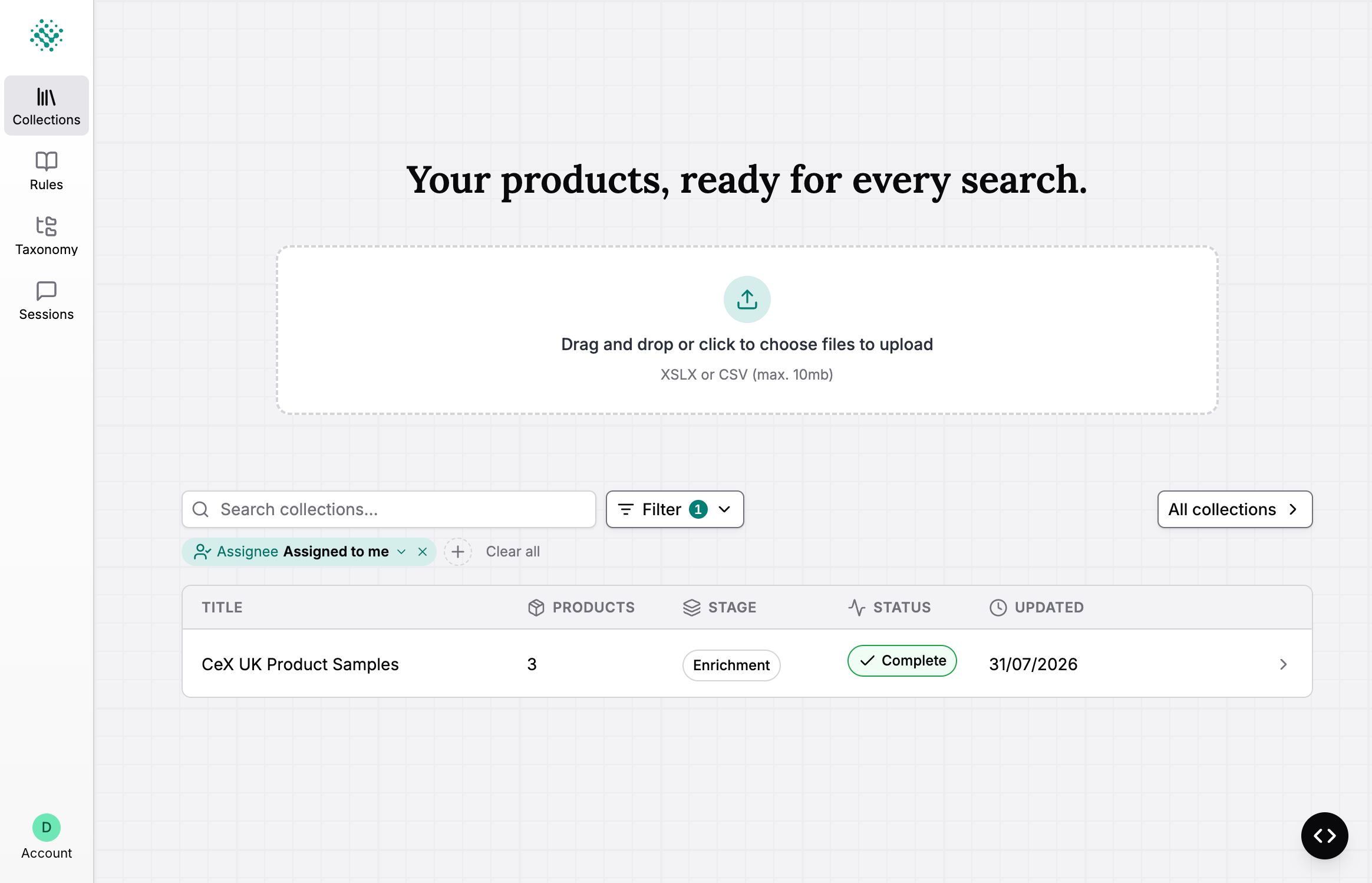
Agentic Replatform
Led an end-to-end agentic product enrichment platform rebuild
Ocula's agentic e-commerce optimisation platform launched as an MVP. I ran the redesign to make the most of its agentic nature, giving customers more flexibility, accuracy and control, and giving the business room to scale.
Read case study →
Agentic Design Ops
Enabled an engineering team with Agentic Design Ops to ship end-to-end features
A design process and set of agent skills that let product engineers own small features from problem statement to release, using design system components, with throughput on some features up by as much as 300%.
Read case study →
Experiments
Small tools I've built to chase a curiosity or scratch an itch, usually outside of any brief. They don't always go anywhere, but every one of them has taught me something I've carried back into the day job.
Shadow creation tool (opens in a new tab)
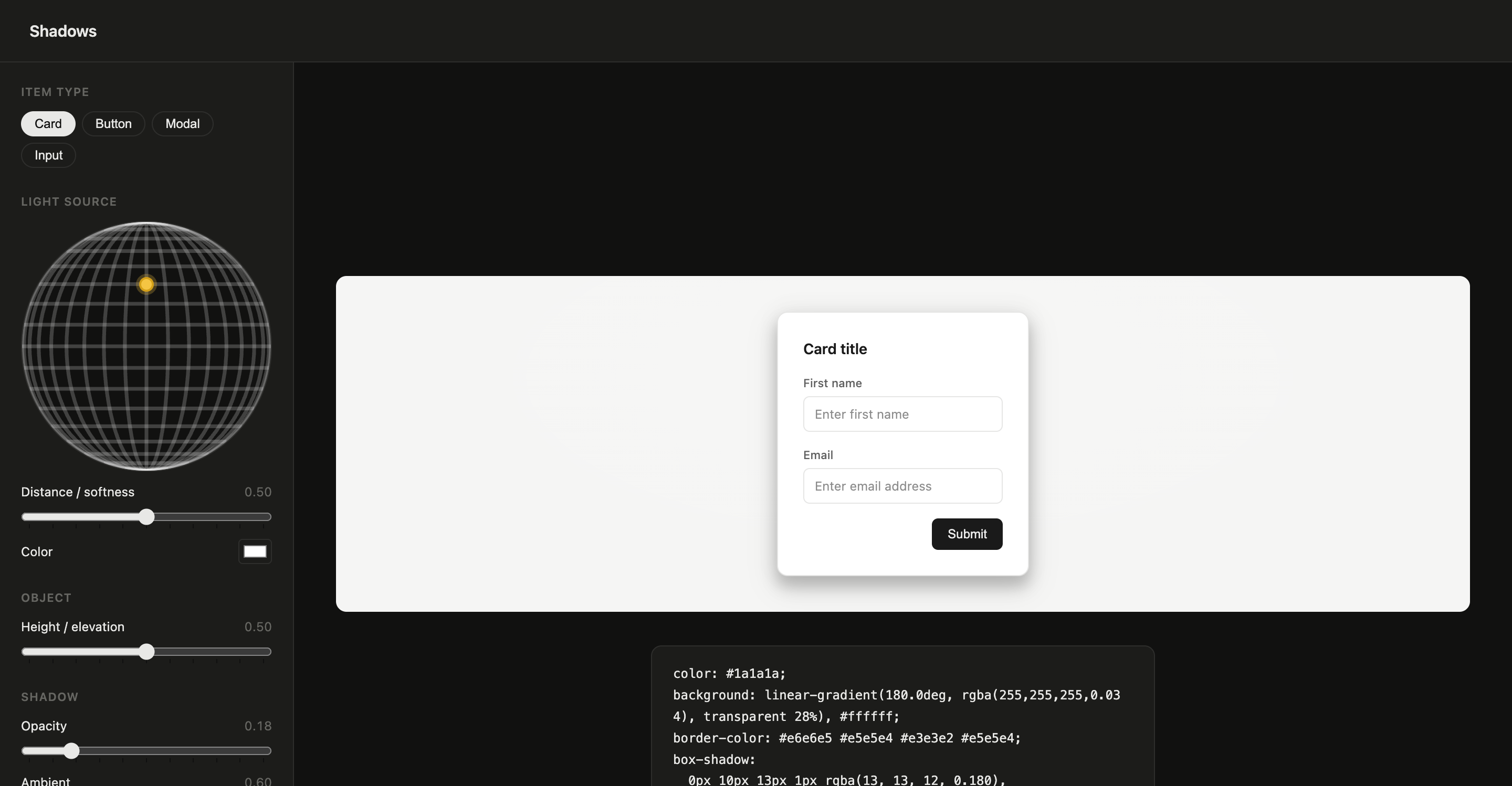
I had been thinking for a while about how light sources work and how they are applied in UI design.
For the most part depth is simulated with the use of shadows. I wanted to experiment if I could take that further by also applying highlights and colour gradients as if the objects were being lit from a single light source.
Cullers (opens in a new tab)
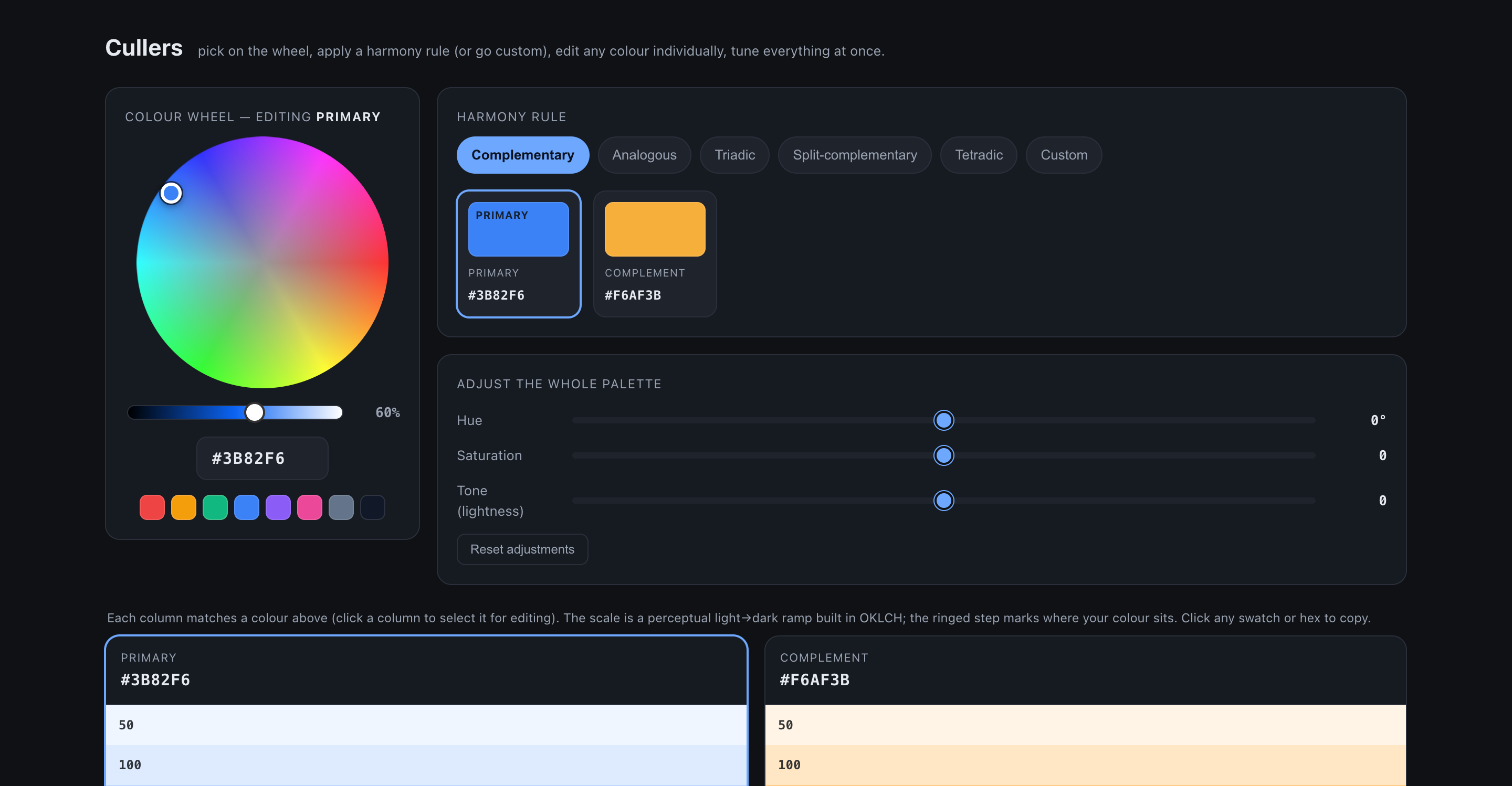
I wanted to create a tool that would let me create harmonious colour palettes. It's a simple tool that allows you to select a base colour and then generates a range of colours that are harmonious with the base colour.
I also wanted to be able to tweek the outputs so they were all the same saturation, tone and lightness.
Patina UI (opens in a new tab)
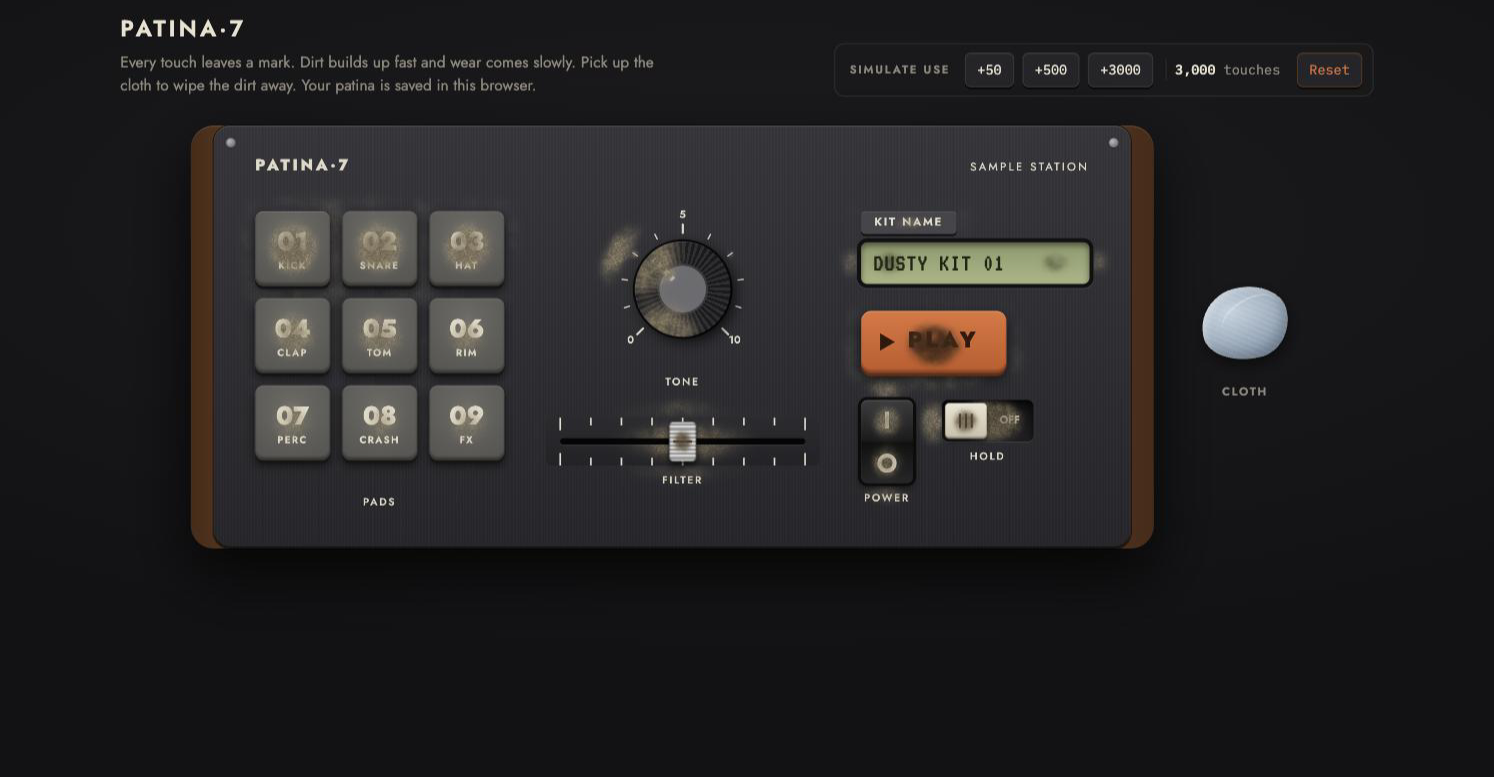
Real objects show their use: worn keys, shiny door handles, smudged screens. Interfaces stay box-fresh forever, so I wanted to see what it would look like if they didn't.
Patina UI is a little sample station where every touch leaves a mark. Dirt builds up fast and wear comes slowly, and you can pick up the cloth to wipe it clean. The wear is saved in your browser, so it ages the more you use it.
How I work
A handful of habits I keep coming back to, from how I dig into a problem to how I hand the repetitive parts off to agents. What ties them together is noticing what matters, staying consistent, and making sure the people around me come out ahead too.
Understand the people and the problem
Before I sketch anything, I want to know who I'm actually designing for: what they're dealing with, what the business needs, and what's getting in the way. Slowing down here saves everyone time later.
Identify problems
Problems rarely announce themselves. I notice them early, and put effort where it counts.
Right usually isn't easy
Finding the right answer takes real effort: understanding the problem properly, not settling for the first idea. But that doesn't mean it should take weeks. I get there fast, ship it, and let real use tell me what I got wrong.
Hide the complexity
Somebody has to hold the messy, complicated reality of a system so the person using it doesn't have to. I don't mind that job; it's most of what design actually is.
Design is a team sport
I do my best thinking out loud, in a room with engineers and product people poking holes in it. The work gets better when more people care about it, not fewer.
Consistency is key
Small inconsistencies don't feel like a big deal in the moment, but they add up into a product that feels like nobody's looking after it. I try to be the person who is.
Raise the tide
The proudest moments in my career haven't been my own work; they've been watching someone I've mentored do something better than I could. That's the job, really.
Agents crunch, I critique
I let agents do the repetitive grinding: the drafts, the variations, the busywork. What I bring is taste: knowing which of those ideas is actually good.

My agentic process
Design thinking extended with build and monitor stages, and feedback loops that pull learnings back to earlier stages instead of starting over. At every stage I set direction and make the calls; agents take on the repetitive grinding that used to eat the time in between.
Discover
Understand users, business context, and constraints, including where AI can genuinely help and where it can't.
Me I run the interviews and read between the lines only a human catches.
Agents Digest transcripts, tickets, and analytics into patterns I can sanity-check.
Define
Frame the real problem, and identify where deterministic flows break down and agentic behaviour is the better fit.
Me I write the brief and draw the line between what's deterministic and what needs judgement.
Agents Draft problem statements and edge-case lists for me to argue with.
↩ Loops back to DiscoverIdeate
Explore concepts across both interface and agent behaviour, not just screens, but how the system reasons and responds.
Me I set the concept direction and call which ideas earn a prototype.
Agents Fan out variations fast, so I'm critiquing options, not staring at a blank page.
Prototype
Build clickable and agent-backed prototypes to test real interaction, not just visual design.
Me I design the interaction and decide what "good" looks like before it's built.
Agents Wire up working prototypes against real model calls, not Wizard-of-Oz screens.
↩ Loops back to IdeateTest
Validate with real users and real model behaviour, refining acceptance and success criteria stage by stage.
Me I run the sessions and read what users don't say out loud.
Agents Log failure modes and flag where model behaviour drifts from the brief.
↩ Loops back to Ideate & DiscoverBuild
Turn validated prototypes into production-ready features, in close partnership with engineering.
Me I pair with engineering to protect the interaction and behaviour we validated.
Agents Handle the repetitive implementation grind: variations, edge cases, boilerplate.
Monitor
Watch how it performs live, then feed what's learned back into earlier stages rather than starting over.
Me I watch the metrics that matter and decide what's worth acting on.
Agents Surface anomalies and usage patterns I'd otherwise miss.
↩ Loops back to Discover
Experience
Most recently, I’ve been Head of Design at an AI-native SaaS startup, going from 0-1 and defining how an agentic product moves and behaves. Before that, 15 years spanning multinational consultancies and large-scale government digital delivery. I work best where I’m setting the vision while staying close to the interaction and interface design craft.
May 2022, Present
Head of Design
Ocula Technologies
B2B SaaS startup providing AI-powered product data enrichment and content generation for large-scale e-commerce retailers including AO.com, House of Fraser, ASDA and M&S.
- Led the full redesign of Ocula’s platform from a traditional SaaS product to an AI-native operating environment, establishing interaction patterns for probabilistic, agent-rendered interfaces where the AI determines the user journey rather than a fixed navigation structure.
- Designed and shipped a conversational agent interface for product copy generation, replacing a multi-step stepper form with a natural language input flow that supported the flexibility required to set rules which can generate high quality copy at scale.
- Designed natural language and intent-driven UI components across the platform, including prompt input patterns, AI output review flows, confidence surfacing, and inline editing of AI-generated content.
- Established the platform interaction model for an AI-first optimisation environment, including agentic workflows, multi-step reasoning interfaces, and escalation patterns for human-in-the-loop decision points.
- Worked closely with engineering and product to define agent personality, tone of voice, and interaction style, ensuring consistent and trustworthy AI behaviour across all touchpoints.
- Built and owned an AI-readable design system using atomic design principles, defining atoms, molecules, and organisms that integrate directly into engineering workflows via Storybook as the single source of truth.
- Established a weekly design system review cadence to govern component iteration, adoption, and consistency across product teams, while actively evaluating next-generation AI design tooling to improve velocity and collaboration.
March 2017, May 2022
Design Lead
Kainos
Multinational digital consultancy specialising in government, healthcare and enterprise digital transformation. Led design across a 60-person design organisation, managing designers, researchers and service designers on multi-million pound contracts.
- Led the design team delivering IPAFFS (Import of Products, Animals, Food and Feed System) for DEFRA, a large-scale, mission-critical government service managing import controls in a post-Brexit regulatory environment, working within strict government assurance, security and accessibility requirements.
- Led research and design on the COVID-19 Vaccination Booking System for NHS Wales, designing for a national audience across all demographics under time-critical delivery constraints.
- Delivered Design Thinking training to approximately 200 participants across DEFRA, upskilling civil servants in user-centred design methods.
- Ran a user research engagement with HelloFresh to support their data architecture replatform, translating technical complexity into clear user needs.
- Worked within and around regulated, security-sensitive government environments requiring Disclosure Scotland security clearance.
November 2014, March 2017
UX Managing Consultant
Sopra Steria
International IT consultancy serving local and regional government, healthcare, financial services and commercial sectors. Managed a team of UX designers and researchers across multiple concurrent projects.
- Managed a team of 5 designers and researchers across Student Loan Company feature delivery teams, maintaining quality and consistency across parallel workstreams.
- Led the design of a large-scale transformation project for Marine Scotland and a stock management system upgrade for Edrington Whisky Distillers.
- Developed a UI scaffold toolkit incorporating a style guide and component library, adopted as standard across all Sopra Steria UX projects.
- Created a UX methods kit to ensure consistent research and design practice across a distributed team of consultants.
January 2013, November 2014
Digital Designer
Storm ID
Digital transformation consultancy based in Edinburgh, serving government, healthcare and commercial clients.
- Championed a content-first design process and developed a content strategy guide adopted by clients as an in-house reference.
- Ran collaborative workshops to create user journeys from personas, and used wireframe and style tile combinations to run visual and layout design in parallel.
- Assisted front-end developers in creating a Gulp-based automated build system.